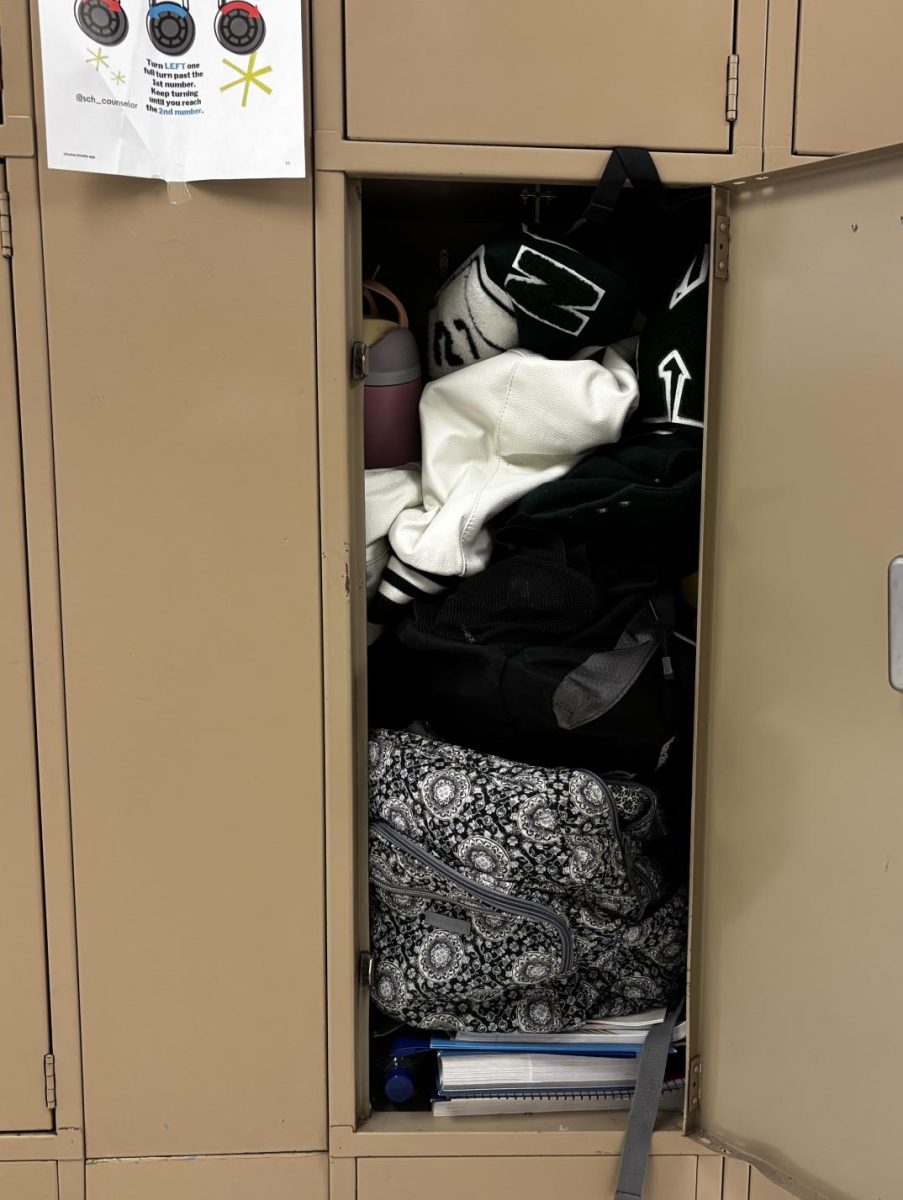
The clock strikes 7:25, and a warning bell rings across the halls of KHS. Students have just five minutes to reach their locker, organize their belongings, and arrive to class on time. One student’s locker is located on the third floor, and their first block is downstairs. Another student must run to the locker room by the gym after stopping at their personal locker. As this student races down the hall, another student’s arms are overflowing with classroom materials.

On Aug. 27, a new policy took effect that requires students to use their lockers to store supplies and backpacks during school hours. All lockers must be shut and locked with a school-issued lock when not in use. Principal Jennifer Oluwole explained that the change was implemented to address a larger issue: the distraction caused by phones in classrooms. Oluwole said, “The rules are all interconnected. The committee needed to find a way to enforce the cell phone policy and ultimately landed on having them stored in lockers.” She said that if students are using lockers to store their phones, they can also store backpacks.
Other high schools, such as Nutley High School, have similar policies to KHS and do not use backpacks. In contrast, Montville Township Superintendent Thomas Gorman said, “As of now, there is no restriction for students and their backpacks, and students are not required to use their lockers.”
Teachers have also reported that the lockers “help with healthy socialization and help get students off their phones; they’re actually talking to their friends in the hall,” said visual arts teacher Casey DeWaal.
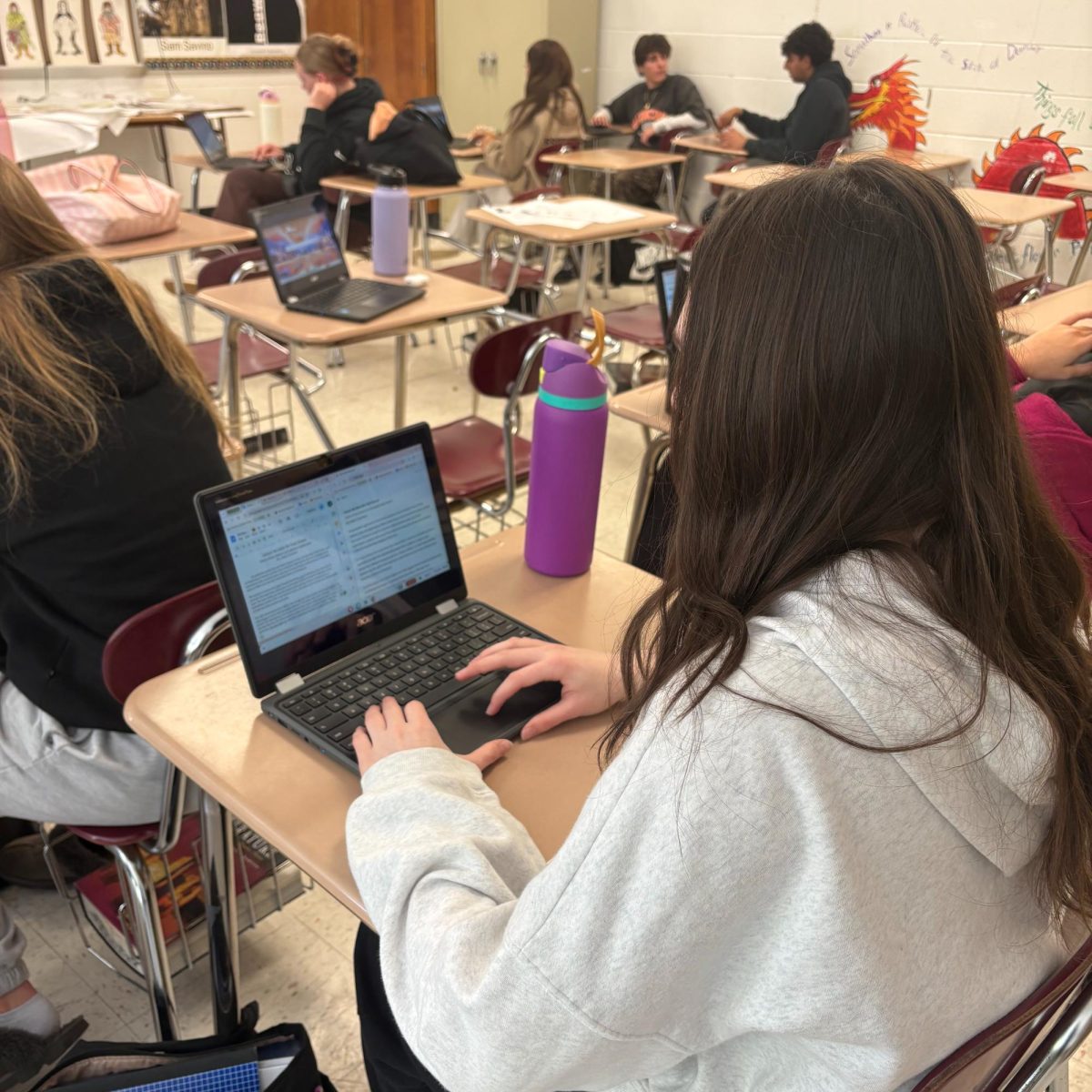
However, many people in the community worry that the implementation of lockers takes time away from learning. History teacher Anthony Colabella said, “[Lockers] affect [students’] learning time because they’re spending more time out of their classroom because they are forgetting what they need to bring to class, and they’re worried about going to their locker or getting things from their locker to get the correct resources for that class.”
Students share similar views on lockers; they add responsibilities that distract from schoolwork. “I have to get to school extra early, and I always rush during passing periods because I can never open my locker, and it makes me late to class,” said freshman Addison Reckler.
Busy hallways and crowded locker spaces create another layer of stress. “I keep forgetting things. I’ve been stressed going through the hallways because I fear I’ll be late,” said junior Trevor D’Anton. “What makes it hard is that everyone is going through the hallways at the same time.”
Specifically, athletes have faced logistical issues. “The lockers are not helpful; it is an added step [that] always makes me late to class,” said junior Christian Markley. “When baseball starts, I am going to have to bring all my stuff downstairs in the locker room and come all the way upstairs to put all my school items away in my locker.”

Senior and executive board president Samantha Ferretti expressed the students’ concerns with the new backpack policy. She started a petition, imploring administrators to revise their ruling. The petition on Change.org has accumulated over 600 verified signatures and various comments from concerned students, parents, and supporters from neighboring towns. Ferretti also spoke at the August Kinnelon Board meeting, voicing opinions on behalf of the student body.
To help ease the transition, the school board extended passing time to five minutes, which administrators say has given students more flexibility when using their lockers. Vice Principal Matthew Arroyo said, “We adjusted our bell schedule to include an extra minute of passing time based on feedback we received, so students have an easier time when they walk through the door.”
Arroyo and the staff’s efforts towards enhancing the policy are motivated by the school’s prioritization of safety. When creating the rule, Oluwole said that there was no isolated incident that sparked its creation, but rather, “the climate of the world.”
While lockers are meant to enhance safety and organization, the policy has created undeniable stress for students. A compromise, students argue, could entail using clear backpacks or tote bags in classrooms, allowing them to carry essential items like Chromebooks and feminine hygiene products while adhering to safety protocols.
Finding a middle ground between students and administrators could create a balance between security and accessibility, ensuring that KHS remains a safe and supportive environment for learning.