Adviser’s Note: The views, thoughts, and opinions expressed in this opinion article belong solely to the author and do not reflect the views of The Colt Chronicle Staff, Kinnelon High School, or its students and staff members.
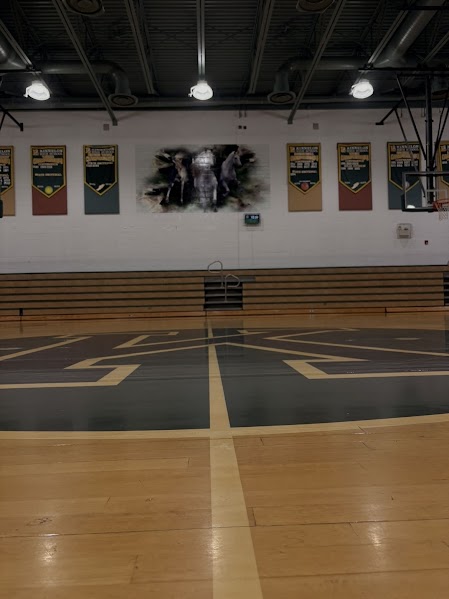
A sneaker plants hard on the gym floor during a drill, but instead of stopping, the foot slides across the court. A player lands from a jump and stumbles forward, losing balance. In the KHS gym, moments like these are becoming so common that they barely surprise athletes anymore.
Kinnelon High School’s gym floors have become a maintenance issue. They pose a safety hazard that is actively affecting the performances and confidence of student-athletes across multiple sports.
Athletes and coaches describe the court as “sliding everywhere,” “dangerous,” and “not trustworthy.” These complaints go beyond the inability to play with complete confidence. They describe a surface that is unreliable to athletes, forcing hesitation in sports built on speed and precision.
Junior basketball player Amelia Olsen explained that slipping happens regularly during practice. She said, “It makes us play more cautiously,” adding that the lack of traction can throw off athletes’ rhythm and fast-paced play.
The issue is not isolated to basketball. Senior volleyball player Sienna Fein described difficulty planting and landing safely on the court. She said she often holds back without realizing it.
Coaches have observed the same pattern from a different perspective. Basketball coach Samantha Beck reported that players frequently struggle to stop during drills and games, with their feet sliding even during controlled movements. Opposing teams have also taken notice, with some referring to the gym as an “ice rink,” highlighting the widespread recognition of the issue. In response, the coaching staff has even begun sweeping the courts before games to improve traction, a short-term fix that underscores a long-term problem.
This concern has been building for years, tied largely to ongoing moisture issues beneath the gym floor. In the winter of 2024, the problem became severe enough that the new gym was shut down during preseason, forcing basketball teams to practice in the old gym. Water trapped beneath the wood caused visible buckling. Although an architect later confirmed there was no active seepage and deemed the court safe to use, administrators and maintenance staff attempted to manage the issue by regulating the gym’s temperature, since heat and airflow changes can cause the wood to expand and shift. No structural repairs were made at the time, reinforcing the idea that the floor was considered functional. According to information shared at a board of education meeting, the gym is now scheduled for resurfacing this summer, a $32,000 process done roughly every 10 years, with additional recoating maintenance costing about $3,000 every two years.
Broader safety research reinforces what athletes are experiencing firsthand. According to Abacus Sports, dust and debris on playing surfaces reduce traction and create slippery conditions that can lead to accidents. Traction is a safety requirement.
While maintenance challenges exist, other schools manage to keep their courts safe through scheduled cleaning. That contract raises a straightforward question of prioritization.
KHS needs to treat this issue as urgent rather than routine. Whether through a consistent waxing and cleaning schedule, maintenance planning, or resurfacing, action is necessary to restore safety.
Athletes should not have to adjust their game around the fear of injury. Coaches should not need to compensate for unsafe conditions with workarounds. The responsibility now lies with the school to ensure that the surface beneath its athletes supports their needs.