Adviser’s Note: The views, thoughts, and opinions expressed in this opinion article belong solely to the author and do not reflect the views of The Colt Chronicle Staff, Kinnelon High School, or its students and staff members.
Chat GPT, Google Gemini, and Gauth AI are all popular artificial intelligence (AI) models, specifically designed to quickly generate responses based on what someone inputs into them, whether it be a photo or text. When it comes to these generative systems, they can be useful in business, science, and healthcare. Still, they are known to harm the environment, social skills, and even human intelligence.
One might argue that when it comes to AI, the amount of benefits outweighs the drawbacks. The article The University of Illinois Office of Communications states that AI enhances personalized learning, handles administrative tasks such as grading and scheduling, and helps students understand complex concepts more easily.
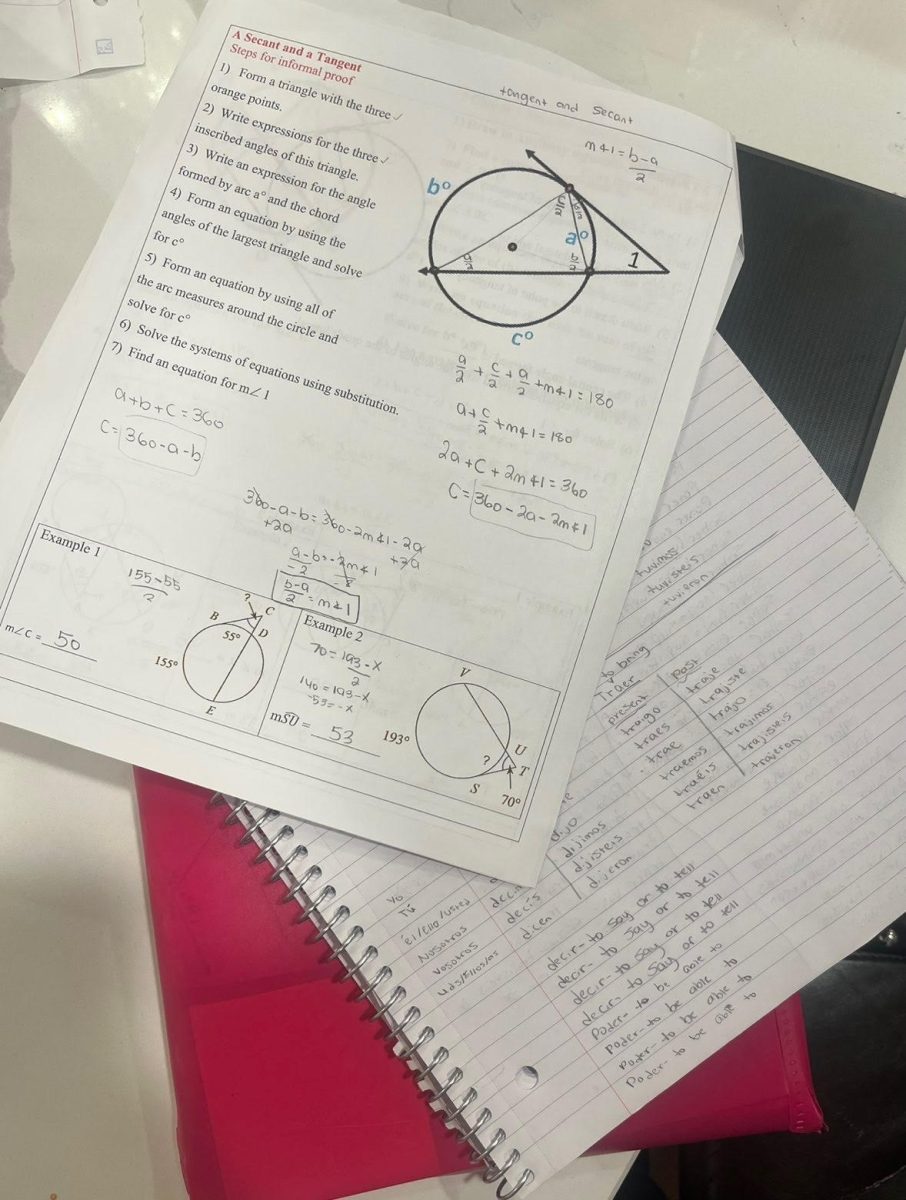
Freshman Brooke Sessa said, “AI is extremely convenient, especially with school work. For example, when I have no time to complete a worksheet assigned, I can finish it easily, stress-free with AI.”
The University of Cincinnati Online supports the cause of AI by arguing for its use in health care. “AI could be used to assist researchers in developing cures and treatments for illnesses that have plagued mankind for many years.” This shows how AI can do more good than harm to society, by discovering new ways we can cure illnesses and disorders that were unknown before.
However, as AI can be a reliable resource in schools and workplaces, no one seems to take into account the amount of harm it has caused in recent years. The article, “The Green Dilemma: Can AI Fulfil Its Potential Without Harming the Environment?” emphasizes the harmful effects of the development and training of various generative technologies.
In a recent study conducted by researchers at the University of Massachusetts, scientists aimed to determine how much energy was used to train certain popular large AI models. They ultimately found that 626,000 pounds of carbon dioxide were used, “which is the equivalent of around 300 round-trip flights between New York and San Francisco – nearly 5 times the lifetime emissions of the average car,” as stated in the article.
Carbon dioxide is derived from burning fossil fuels, which contributes to greenhouse gas emissions. Releasing carbon dioxide into the atmosphere can trap heat, leading to higher temperatures, climate change, and other factors that continue to disrupt the natural habitats where animals and humans, as a society, live.
Another effect of AI is how it continues to degrade human intelligence. A recent study conducted by the Brookings Institution’s Center for Universal Education showed that AI can pose a huge threat to the development of cognitive growth, especially in children.
Rebecca Winthrop, an author of the study, said, “When kids use generative AI that tells them what the answer is … they are not thinking for themselves. They’re not learning to parse truth from fiction. They’re not learning to understand what makes a good argument. They’re not learning about different perspectives in the world because they’re actually not engaging in the material.“
Although there are many benefits to using AI, it is important to exercise caution and limit the frequency of its use. Sometimes, its convenience masks the negative aspects of using AI.