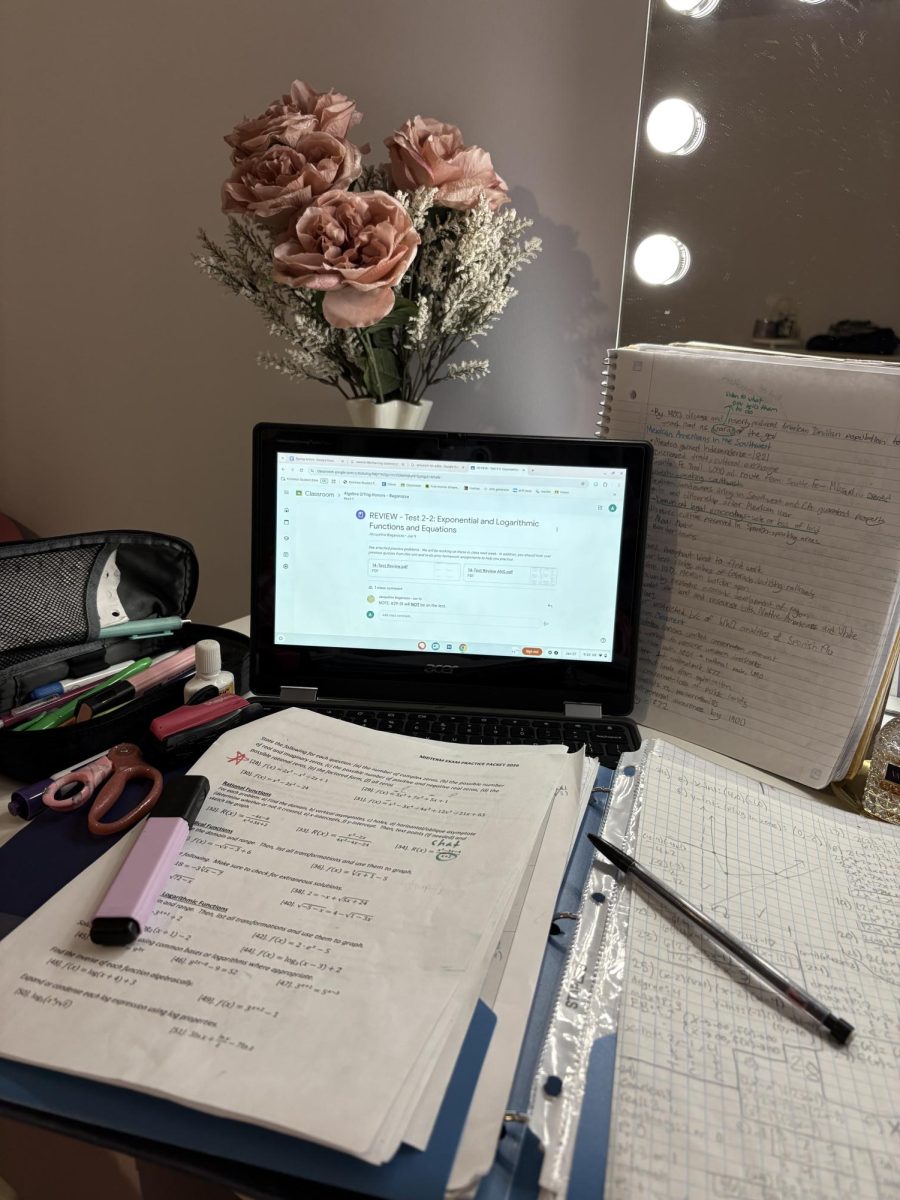
By the time March rolls around, school doesn’t feel like school anymore. School feels like war. Between the harsh wake-up time, the stressful amount of work, and the expectation to finish off strong, no wonder students count down the days until spring break. The phrase “I’m so tired” becomes less of a complaint and more of a school-wide daily greeting.
Burnout, usually associated with college students or busy adults, has become increasingly common among high schoolers. The stretch between winter break and spring break is packed with exams, practices, and long-term decisions, contributing to a perfect storm of stress. For many teens, their determination fades as teachers’ expectations peak.
Seniors are very familiar with this feeling; juggling responsibilities while planning their futures. Jacki Lally, a senior balancing extracurriculars, impressive academics, two jobs, and college action planning, talks about her busy at-home schedule in addition to her packed school day. “The most overwhelming part of my day is when I go home because that’s when I have the most stuff to do,” she says. Between competitive cheer practice, scholarship applications, babysitting, homework, and studying, Lally can’t find a break.
Conflicting with the idea that senior year is a kindergarten-repeat, Lally says, “It definitely made my stress levels go up,” thanks to difficult college decisions. Those who think the college process is over once applications are submitted underestimate the timely demand of scholarship applications in addition to an overwhelming to-do list.
Burnout, however, is not exclusive to seniors. Freshman Brayden Jones mentions that he began feeling overwhelmed much sooner in his high school career than he expected. For him, his burnout comes from the constant flow of homework across all classes. Jones says, “I don’t think teachers realize that we have eight other classes that we have daily homework in.”
Jones wishes that teachers were aware of their students’ lives and more considerate with their workloads. “There have been many times when I’ve had three or more tests on one day, and teachers just have no idea,” pointing out that academic demands interfere with personal chores students keep up outside the classroom.
From a student-athlete’s perspective, the kick-start of spring sports puts additional stress on students. Senior athlete Maddie Gigante talks about the importance of managing burnout with self-awareness and balance, as her well-being always hold number one priority. She says it’s crucial to recognize when she needs to step back and “to listen to your body when you need to take a break.” Even if it requires skipping a night of practice, school, and mental health are two aspects she believes should always be in balance.
Gigante explains that burnout for her shows up when one commitment dominates other parts of her life. “If I work too much, I’m going to burn out… or if I do too much of one sport, I burn out too quickly,” she says. By keeping her activities in order, she can continue doing the activities she loves rather than feeling restricted due to overcommitment.
Teachers notice this shift as well. Physical education teacher James Soules sees a huge drop-off in student energy as the days inch closer to break. He says, “Their brains and bodies are checking out,” emphasizing that the issue isn’t a lack of interest in the particular gym unit, but cognitive overload.
Soules mentions that burnout is often a mental sign before it becomes a physical indicator. Many students enter class visibly tired or will even go to the nurse and get a pass to sit out for the day. In response, teachers try to adjust their expectations and incorporate units that students might enjoy. One intentional unit in the curriculum is the yoga unit. “We like to throw an easier unit in the mix to give kids a break,” allowing kids to have their meditation time and the chance to relax their bodies.
As spring break gets closer, students tightly grip the rope of rest, warmer days, and a lighter workload. Lally believes small school-wide efforts could help lift student stress. “Maybe if there was something integrated to give students a break, like some kind of mindfulness day or an activity day,” she recommends.
Burnout can be a hard mental state to navigate through during the toughest stretch of the school year, but understanding it can help lessen the impact of its side effects. When students feel understood and supported, the final weeks before break might feel more manageable. It’s up to teachers to recognize this exhaustion and remember that effort doesn’t always look the same this time of year.