Adviser’s Note: The views, thoughts, and opinions expressed in this opinion article belong solely to the author and do not reflect the views of The Colt Chronicle Staff, Kinnelon High School, or its students and staff members.
The last week of January brought a level of uncertainty, overlapping deadlines, and high stakes unfamiliar to current Kinnelon students.
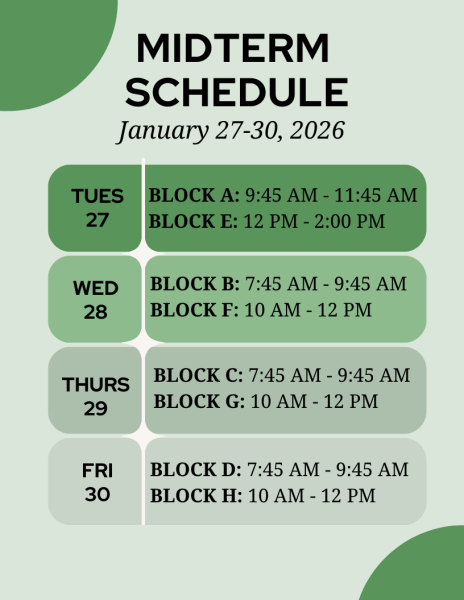
After a nearly decade-long hiatus, high school students returned to a traditional testing schedule this winter, with midterms officially reinstated across all core and elective subjects. All subjects except Advanced Placement, Physical Education, and Self-Contained classes were required to have a midterm. To accommodate this, the district implemented a half-day schedule from 7:30 a.m. to 12:15 p.m., with two two-hour testing periods (7:45 a.m.-9:45 a.m and 10 a.m.-12 p.m.) and a fifteen-minute break, requiring students to be present for all instructional classes.
According to KHS College Board and State Testing Coordinator Hannah Sappio, the return of midterms resulted from a longer discussion than students might believe. “We have been requesting midterms for a while. Before we attempted benchmarks, but it was not effective for some subjects. [The administration] thought it would be beneficial to have midterms because there are so many kids who are exempt from final exams, so we don’t have a consistent academic record. We used to have midterms before COVID, and we just wanted to bring them back.”
In theory, this reasoning is strong. College courses often rely on major exams, and exposure to cumulative assignments can help students develop long-term study habits and endurance for standardized tests. However, the transition back to midterms revealed challenges in communication and execution.
To resolve this, the Student Council Executive Board met with Principal Jennifer Oluwole to express student concerns about midterms and gain clarification on new procedures before they began.
Senior and Student Council Executive Board member Olivia Bsales said, “We organized this meeting with Mrs O. because we felt unprepared for midterms, and that everything was thrown at us at the last minute. We’ve heard these concerns from many other students, especially seniors, so as student representatives, we thought it was important to advocate for ourselves and the entire student body.”
One of the most common issues voiced by students was unbalanced preparation between classes. “Honestly, I didn’t feel informed. I felt like some teachers didn’t even bring [midterms] up, and the ones that did, wouldn’t review things in class; it was more of a ‘do it alone and I’ll post the answers’ situation,” said sophomore Kaitlyn Chapman.
Freshman Lilyann Baldino agreed, saying, “A lot of my classes didn’t give us time in class to go over older topics; we only focused on new topics. We got review packets two days before the midterm to do at home, and that definitely didn’t help me study for it.”
From the faculty perspective, the sudden return of midterms created challenges. Chemistry teacher Adam Smith expressed the significant workload of preparing for midterms.“It’s a tremendous amount of work to both prepare the midterms and put together study material, outlines, and practice questions to share with the students 2-3 weeks ahead of time,” he said. “The grading of the exams is a lot of work; we haven’t had midterms in at least 7 or 8 years, so it was tough.”
On the other hand, Smith eased student concerns about the loss of instructional time. “[Midterms] are four days in a row, and other than AP and some other classes, there’s no teaching going on. [Teachers] do lose two or three hours of teaching time, but the trade-off is that we are trying to get students ready for high-stress situations in college.”
According to Sappio, midterms count as ten percent of the mid-year grade, with each marking period weighted at twenty percent. While this limits the impact of one exam, it still creates stress for academically-focused students who haven’t experienced a midterm before.
Ultimately, the return of midterms marks an effort to strengthen academics and college preparedness. However, rigor is not enough. For midterms to be effective rather than overwhelming in the coming years, expectations must be clearly communicated by the administration, preparation in class must be consistent, and students must feel supported emotionally and academically.