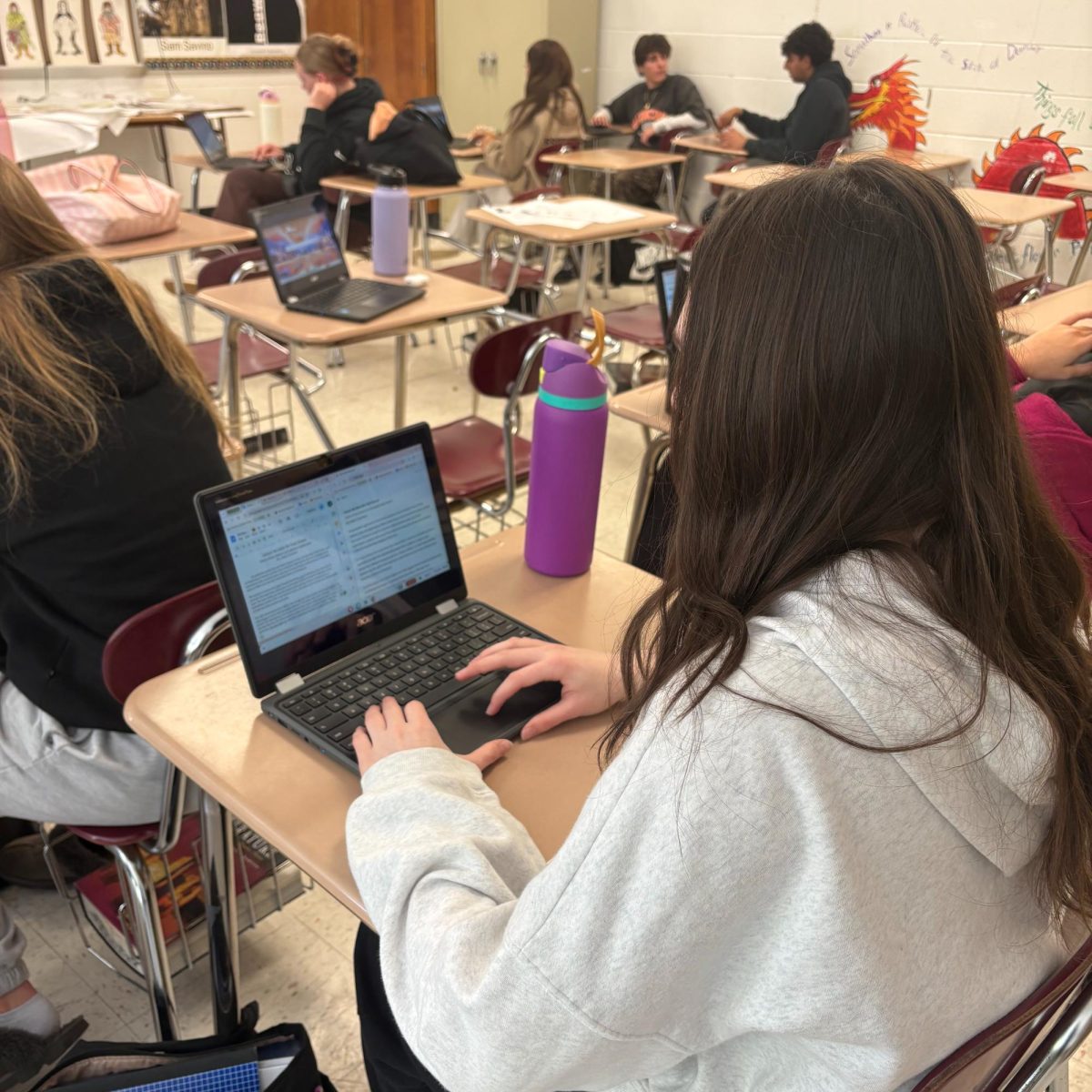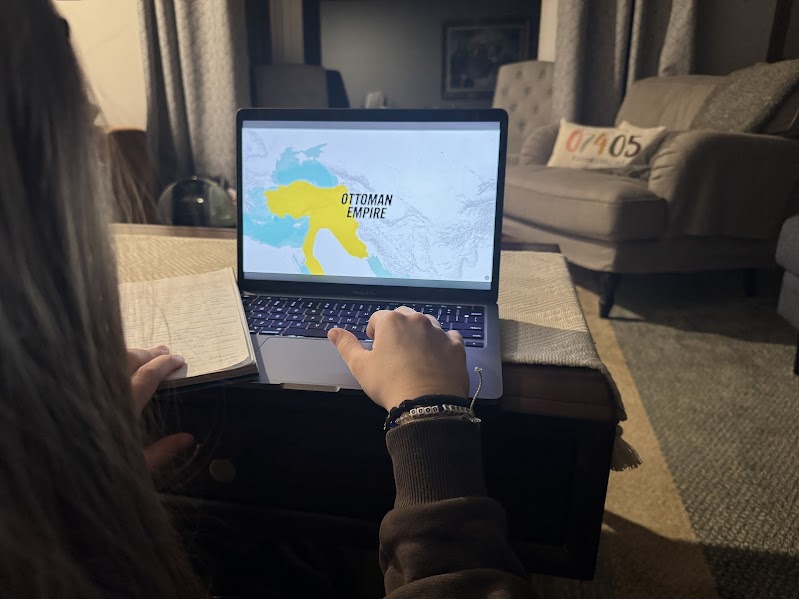
As the school year begins to wind down, classrooms across the country become silent as students take their AP exams. As the clock ticks down, the room fills with pencils scraping against paper, keyboards clicking, and fingers anxiously tapping against tables. These moments are the result of months of preparation, with students relying on information they gathered throughout the year.
In 2024, there were around three million students who took an Advanced Placement test, marking a 7% increase compared to the previous year. However, not all students received passing scores, as only around 60% to 70% of students received a score of 3 or higher. This highlights that effective preparation is significant as student participation continues to grow in AP classes.
Specifically, teacher guidance is an essential part of preparing for an AP test. History teacher Elena DeStories said, “I structure my course by following the AP United States History Course and Exam Description (CED). This is a course guide that outlines all of the required content, learning objectives, and information that students must learn to prepare and succeed on the AP exam.”
However, even with teachers’ assistance, many students still struggle with college-level material. ”A common challenge that students face when preparing for the AP exam is time itself,” said DeStories.
In addition to the limited time, students also struggle with the large amount of material these courses demand. Chemistry teacher Adam Smith said, “The biggest challenge is that we are testing not only on the content of this year’s course, but [students] also need to recall everything from the first year chemistry course [Chemistry Honors].”
Despite these challenges, teachers provide students with strategies to succeed. DeStories explains for multiple-choice questions, she encourages her students to eliminate two “outliers,” which then gives them a significantly higher chance of selecting the correct answer from the two remaining options.
For many students, techniques played a significant role in their success. “Last year, before my APUSH [AP United States History] exam, I spent a lot of time reading the textbook and highlighting the main points of each page,” said junior Carly Draudt. “I feel like this really helped me absorb the information and receive a good score on the test.”
As AP exams approach, final preparation becomes even more important. DeStories suggests that students “attend at least one of the two extra help sessions in April and that they review the material either with a friend, or in small study groups” to help reinforce key concepts.
In addition to reviewing the material, feeling comfortable with the testing format is just as important. Smith suggests that students become familiar with their exam’s pacing, noting that the science department offers a full-length practice exam on a Saturday morning in April. Also, teachers can assign their students multiple-choice and free-response practice questions in AP Classroom.
The 2026 AP Exams will be administered in schools over two weeks in May: May 4 to 8 and May 11 to 15. Overall, as AP tests get closer, preparation, time management, and effective study strategies become essential. When the test begins, and pencils meet paper, preparation officially shifts to performance.