Adviser’s Note: The views, thoughts, and opinions expressed in this opinion article belong solely to the author and do not reflect the views of The Colt Chronicle Staff, Kinnelon High School, or its students and staff members.
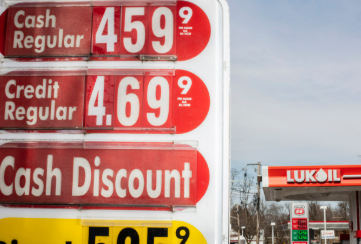
New Jersey drivers, accustomed to some of the most competitive fuel prices on the East Coast, are approaching the pump with a sense of dread. As of May 11, the statewide average for a gallon of regular gasoline has surged to $4.529. For the first time in recent years, N.J. has surpassed the national average gas price, signaling a significant shift for a state economy heavily reliant on daily commutes.
In early May, state gas prices jumped 9% in seven days, a 36-cent spike that shocked many residents. This isn’t seasonal price fluctuation; it is a strain on residents’ way of life.
The high prices are a result of global instability and local policy. Globally, crude oil prices remain elevated due to geopolitical tensions affecting international supply chains. Locally, however, the state’s gas tax was adjusted to 49.1 cents per gallon to fund the Transportation Trust Fund. While infrastructure requires funding, the collision of this tax with a global energy crisis has major consequences for local drivers.

For many residents, rising gas prices are not just an inconvenience; they are changing daily routines, spending habits, and transportation choices. Families are becoming increasingly aware of every mile driven and every dollar spent.
“It certainly affects the budget,” said digital communications teacher Casey deWaal. “It’s something to be conscious of. It’s more than just me, too; there is a whole global aspect to this.”
Like many commuters, deWaal has already adjusted to rising fuel costs. “I just purchased a new car that has better fuel efficiency,” he said, adding that drivers now regularly compare gas stations to find the lowest prices.
Students and families alike are also feeling the pressure. Freshman Emilia Rzekec explained that her family has become “more careful with how much they spend” to accommodate higher fuel costs. “I used to drive to school with my sister, but now I take the bus so [my parents] don’t have to spend as much on gas.”
For working families, the burden becomes even greater when jobs require travel. Rzekec noted that her father, an electrician, drives to clients regularly, causing transportation costs to impact income. “It puts stress on my parents to give us what we need and still make room for gas.”
Others have simply reduced driving frequency. “So far, [gas prices have] only affected how much I drive,” said junior William Shurts. “I’ve been taking as many rides as I can because I don’t want to pay.”
The emotional impact of rising gas prices is also noticeable. Rzekec described her reaction as “dumbfounded” by the amount her family spends on fuel and worries about lower-income families in the face of inflation. These reactions reflect a growing concern among drivers who feel trapped between the need for transportation and unpredictable prices.
According to business education teacher Cathy Gilligan, several major factors contribute to the state’s rising gas prices, including global conflict and state taxes.
“The war and taxes are currently among the largest contributors,” she explained. Global instability, specifically conflicts in oil-producing regions, disrupts supply chains and increases prices. Although the United States exports large amounts of oil, Gilligan noted that the country still depends on international imports, making total energy independence unrealistic.
State policy also plays an important role. On Jan. 1, N.J. increased its gas tax by 4.2 cents per gallon. Combined with credit card upcharges at some stations, these costs accumulate in the eyes of consumers.
Gilligan emphasized that the rising fuel prices extend beyond transportation. “Everything is affected by rising fuel costs since it will increase the shipping costs of all products, thus causing inflation.” As businesses spend more on transportation and distribution, consumers will see higher prices on goods from groceries to Amazon deliveries.
While rising gas prices mean commutes to work and school will be more costly, the high prices may even indirectly affect those who don’t drive. Increasing gas prices mean that shipping by land, sea, and air is more expensive, and consumers pay these costs.
As gasoline prices continue to rise, many drivers are beginning to consider electric vehicles (EVs) as a long-term alternative.
For senior and Tesla owner Monica Pazowski, the benefits quickly became clear. She cited “no fuel costs, environmental benefits, and less maintenance” as major reasons for switching to an EV. Unlike gasoline prices, she explained, vehicle charging costs tend to remain more stable. “Electricity costs can rise, but it’s still unusually cheaper than gasoline.”
Although global conflicts create high gas prices, N.J. gas taxes have also increased to fund local infrastructure like roads and bridges. Additionally, although goods are rising proportionally with oil prices, these increased costs are also the result of tariffs on imported goods. These tariffs are intended to protect domestic industries and manufacturing against foreign competition.
While global conflicts remain outside of an individual state’s control, policymakers can still take steps to reduce pressure on consumers. Temporary tax relief, expanded public transportation, and investment in EV charging stations could help ease the financial burden of N.J. drivers.

At the same time, consumers are adapting through fuel-efficient vehicles, reduced travel, and a growing interest in electric cars. However, for many N.J. residents, these adjustments feel less like choices and more like necessities.
If prices remain elevated, the effects will likely go beyond the pump, shaping habits, budgets, and transportation itself.