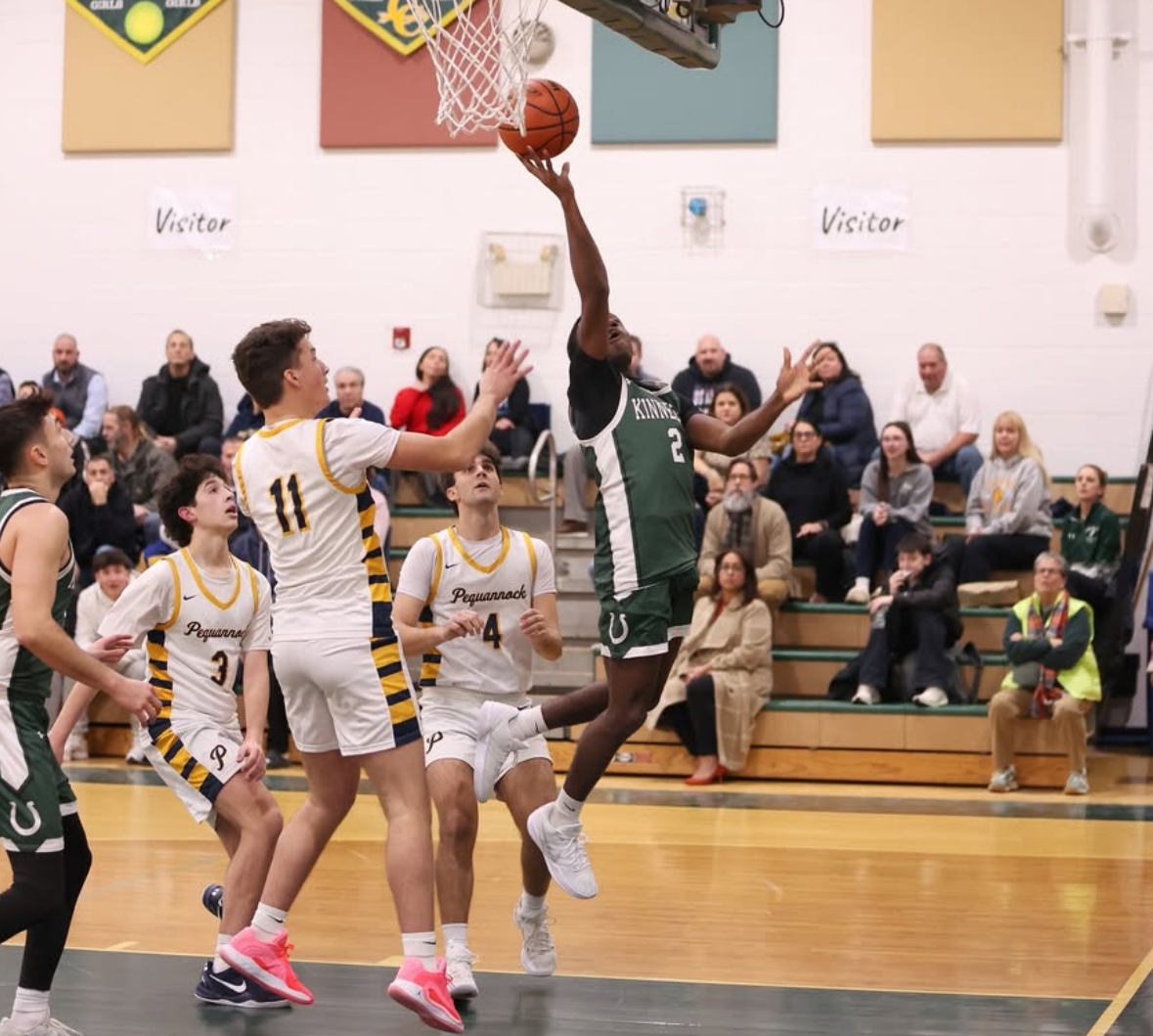
During one of the most heated rivalries in games against Hanover Park, a Colts’ boys’ basketball player experienced a shattering injury; one jump fake that would cost him the rest of his athletic career.
In the middle of one of the Colts’ most intense rivalry games, shooting guard Kymanni Hinton went down. There was no dramatic collision, no obvious contact, just a single step, a jump fake, and a moment that changed the rest of his senior year. What first felt like a kick to the back of his leg quickly became something much worse: a torn Achilles that ended his basketball season and permanently altered his athletic future.
Before the injury, Hinton was having the best game of his life. He was confident, aggressive, and was finally being fed the ball after years of waiting for that role. Then, in less than two minutes, it was over. “I felt like I was on top of the world,” Hinton said. “And then everything was gone.”
Losing More Than the Game
Basketball had been a constant in Hinton’s life for over a decade. Losing it wasn’t just about missing games– it was about losing a part of his identity. Mentally, the adjustment has been harder than the physical recovery. Surgery was successful, and his body is healing, but the emotional weight lingers.
His daily routine now looks nothing like it did before. Pain often keeps him up until early morning. Getting ready for school means navigating hallways with a boot and crutches, leaving class early. Still, he shows up to practice and games, even though watching from the sidelines is one of the hardest parts. Basketball, the sport he loved, now feels distant.
A Team Tested by Injury
For head Coach DeBall, Hinton’s absence was immediately noticeable. As a leader, Hinton set the tone during practices and games, especially for younger players who looked up to him. When the team learned his injury was season-ending, the reaction was devastating. “We’re a basketball family,” DeBall said. “Staying positive became a necessity, not a choice.”
Just as the team began to adjust, another setback followed. Junior Christian Markley tore his ACL only a few games later, ending his season as well. Losing two key players tested the team’s morale and identity. Practices changed. Rotations shifted. Any sense of normalcy disappeared.
For Markley, watching Hinton go through his injury made his own situation feel more real. Though he had supported Hinton from the beginning, it wasn’t until he was sidelined himself that the message fully sank in. “Don’t take anything for granted,” Markley said: advice that now guides his own recovery.
Redefining Injury
The injuries created an unexpected bond between the two. Night after night, they sit together on the bench, encouraging teammates and offering feedback. Neither was officially named captain, but both stepped into leadership roles simply by showing up. DeBall notices it every day– their presence, positivity, and refusal to disappear.
Hinton has found purpose in that role. He cheers louder than anyone, speaks after games, and reminds his teammates of what they are still capable of accomplishing. It’s his way of staying connected, even when being on the court is no longer an option.
Acceptance didn’t come easily. There were moments, especially after surgery, when frustration and impatience took over. Being limited to his house tested him in ways basketball never had. Still, he made the decision to move forward, even without a clear path ahead.
Now, Hinton carries a message shaped by experience rather than words. Sports can disappear in an instant. Seasons can end without warning. What remains is how athletes respond when everything they worked for is taken away.
“Something can happen in under two minutes,” Hinton said, “and you’ll never get that time back.”
His last ride didn’t end the way he imagined, but it left behind something just as powerful: resilience, perspective, and a legacy that reaches far beyond the scoreboard.