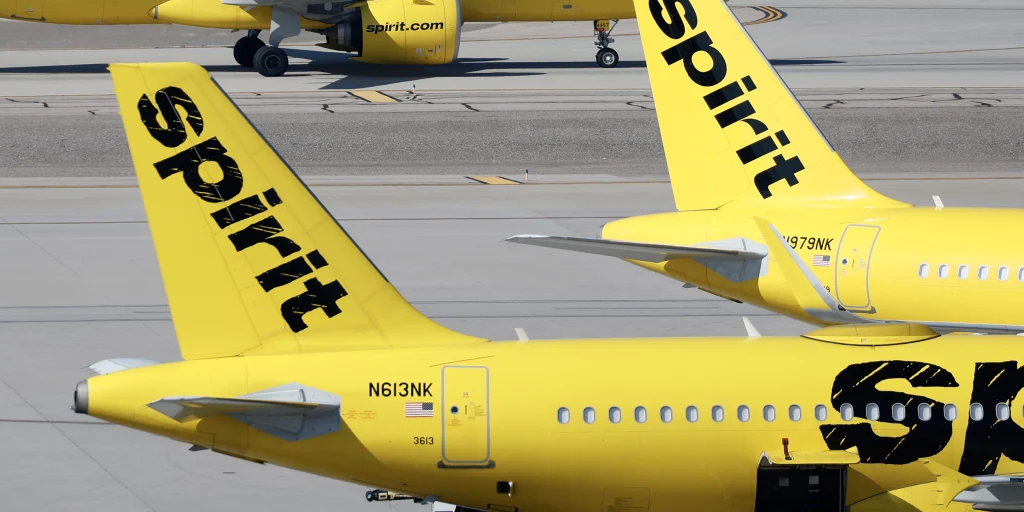
Spirit’s final flight landed at Dallas/Fort Worth International Airport from Detroit Metropolitan Airport on May 2, marking the airline’s abrupt shutdown after 34 years of service. The closure signaled the end of one of the nation’s most recognizable carriers, leaving thousands of employees and passengers affected nationwide.
“We are proud of the impact of our ultra-low-cost model on the industry over the last 34 years and had hoped to serve our guests for many years to come,” the airline announced in its official statement.
Reason Behind the Shutdown:
Spirit Airlines had struggled financially in the years following the COVID-19 pandemic, and ultimately faced its second bankruptcy, filing within a single year. The company was heavily impacted by the rapid increase in fuel prices following the War in Iran and was unable to keep pace with rising operational costs.
Dave Davis, President and Chief Executive Officer (CEO) of Spirit Airlines, previously expressed optimism during the company’s restructuring efforts. He said, “This agreement in principle is the result of months of hard work and allows Spirit to move toward completing its transformation.”
Despite restructuring attempts, the airline’s financial condition worsened. According to Reuters, Spirit’s Chief Financial Officer (CFO) Fred Comer admitted that the company “found no viable path” to continue operations successfully.
Spirit also sought approximately $500 million in federal financial assistance from the White House in hopes of avoiding liquidation. Despite this, negotiations were not successful. “With no additional funding available to the company, Spirit had no choice but to begin this wind-down,” the airline said in an official statement.
Customer and Employee Perspective:
After more than three decades of business, Spirit Airlines employed nearly 17,000 workers. The sudden shutdown left employees scrambling to secure new employment. According to ABC News, a Spirit spokesperson acknowledged that “the majority of the airline’s employees found out about the closure primarily through media reports.” Several major airlines, including Delta, American, JetBlue, and United, began offering discounted emergency airfare to travelers who would provide proof of a Spirit Airlines reservation, helping passengers reach their destinations. Spirit stated that refunds would be automatically processed for customers who booked flights directly through the airline, while passengers who booked through third-party services were instructed to contact those agencies instead.
Employees are currently suing the airline under the WARN Act, according to NBC reports. The law required companies to provide workers with a 60-day written notice before mass-layoffs. Many employees claimed Spirit failed to provide proper notice and informed workers of the shutdown through emails.
Wind-Down Plan:
Spirit Airlines formally requested that the Federal Aviation Administration (FAA) announce the airline’s bankruptcy to crews on May 2, ensuring that no flights remained in the air during the shutdown process. The airline also attempted to give crews ample time to secure hotel accommodations and transportation
Davis described the company’s emergency closure strategy as “Plan Charlie,” which was implemented after bailout negotiations failed.
Spirit executives and stakeholders later appeared in bankruptcy court in White Plains, NY, to discuss the company’s wind-down procedures. Topics included the liquidation of assets, employee retention bonuses, and legal concerns surrounding abrupt layoffs. Reuters reported that the company sought approval for approximately $10 million in retention bonuses for employees tasked with assisting in the liquidation process.
Spirit’s closure has affected not only its employees and passengers, but the airline industry as a whole. The loss of a major low-cost carrier is expected to increase airfare prices and reduce accessible travel options for many Americans.